
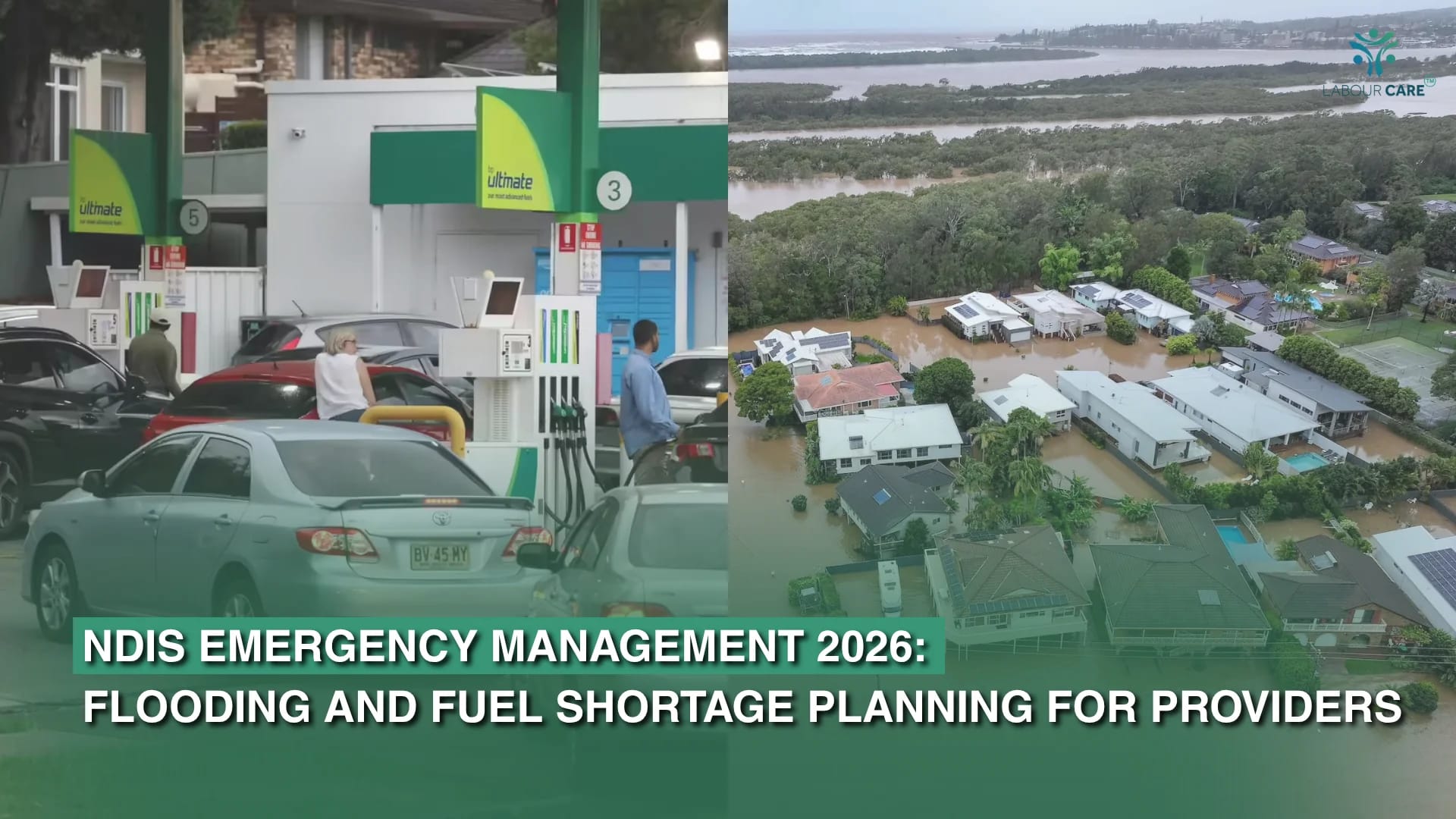
Australia has seen significant weather events in recent months, including flooding in Far North Queensland and the Northern Territory. Global events are also impacting fuel supply chains, which can create petrol shortages and service disruptions. For NDIS providers, these conditions are a direct test of governance, safeguarding, and continuity of supports.
The NDIS Quality and Safeguards Commission urges providers to use the Emergency Management Provider Alert to prepare for emergencies and keep critical supports running during disruptions. In 2026, the expectation is clear: you must plan for emergencies, account for participants’ individual needs, train staff for effective responses, and maintain continuity of critical supports.
What NDIS Emergency Management Means for Providers
NDIS emergency management is about planning and action before, during, and after an emergency so participants remain safe and critical supports continue. The Emergency Management Provider Alert explains that good emergency management requires careful planning to prepare for and respond to emergencies such as bushfires, cyclones, and floods.
Why people with disability face higher risk in emergencies
People with disability can face higher risks when services, transport, power, communications, and supply chains are disrupted. Emergency planning must account for individual support needs and make sure participants are not left without essential assistance during an evacuation, isolation, or service disruption.
Your Compliance Obligations in Emergencies
NDIS-registered providers are required to have documented and tested business continuity arrangements so critical supports continue during disruptions such as disasters, emergencies, staff shortages, system failures, or public health events.
These requirements sit primarily under the Emergency and Disaster Management Practice Standard within the Governance and Operational Management module and are assessed during registration, audits, and compliance activities.
Emergency and Disaster Management Practice Standard
The Emergency and Disaster Management Practice Standard focuses on planning to manage and mitigate risks to participants’ health, safety, and wellbeing during emergencies and maintaining continuity of critical supports.
NDIS Code of Conduct and continuity of supports
All NDIS providers must comply with the NDIS Code of Conduct, including providing supports and services in a safe and competent manner, with care and skill, and taking steps to raise and act on concerns about quality and safety.
Flooding and Petrol Shortages: Why These Two Risks Need Specific Planning
Flooding and petrol shortages create different, but equally serious, risks for service continuity. Flooding can cut off access routes, disrupt power and communications, and limit access to essential supplies. Petrol shortages can quickly impact worker travel, transport to appointments, supply deliveries, and the ability to maintain regular shift coverage.
The Emergency Management Provider Alert encourages providers to plan and account for participants’ individual needs in emergencies, train and prepare staff for confident responses, and keep critical supports running during disruptions.
Flooding risks to include in your plan
Flood planning commonly needs to address evacuation routes, alternative access points, shelter-in-place arrangements, loss of power, limited access to food and medications, and disrupted communications.
Fuel and supply chain risks to include in your plan
Fuel disruptions can affect staff travel, transport services, and supply deliveries. Providers should factor in contingency rostering, prioritisation of critical supports, and alternative transport arrangements in their continuity scenarios.
Personal Emergency Management Plans for Participants

Personal emergency management plans sit alongside your organisational arrangements. The Provider Alert explains these plans are developed separately from organisational plans and focus on a participant’s individual needs and supports during emergencies.
What a participant plan should include
The Provider Alert highlights the importance of plans that cover emergency contacts, important health information and medications, preferred communication methods, and the participant’s support network. Plans should also account for assistive technology, mobility aids, medical devices, and personal care items required to maintain safety and wellbeing.
Accessible communication for plans
Emergency information should be accessible and match the participant’s communication needs. The Provider Alert lists examples like Easy Read, braille, and social stories to support understanding and participation.
Review, rehearse, and practise
Plans should be reviewed regularly and updated when circumstances change. The Provider Alert also encourages practising responses such as evacuation drills, including supports like picture cards and social stories where helpful.
Provider Emergency Management Plans and Business Continuity
Providers should be familiar with their relevant state or territory emergency arrangements and understand how local emergency alerts are communicated.
Business continuity planning as a cycle
The Provider Alert describes emergency management across a cycle of prevention, preparedness, response, and recovery. Business continuity arrangements should be documented, tested, and improved over time based on organisational learning.
Scenarios to test in your business continuity plan
The Provider Alert highlights disruptions providers should plan for, including staffing disruptions, facility disruptions, and resource disruptions such as limited access to food, water, power, and health supplies.
If you are tightening documentation and storage systems so your continuity plans, participant plans, and incident records are audit-ready, this Labour Care guide can help.
Training and Workforce Readiness for Emergency Response
Providers are expected to train and prepare staff for confident and effective emergency responses.
Emergency planning also links to broader WHS obligations. Safe Work Australia explains that workplaces must have an emergency plan in place and it should be accessible, reviewed, and updated regularly.
What staff training should cover
Training should ensure workers understand emergency procedures, participant-specific plans, escalation pathways, and how to maintain critical supports when conditions change. It should also support staff confidence to respond in a way that aligns with participant safety and continuity obligations.
If you are reviewing provider governance and operational readiness before the next audit cycle, this refresher can support planning: NDIS Practice Standards Refresher.
Useful Tools and Resources for Providers
The Emergency Management Provider Alert is designed to support providers to plan for participant needs, train staff, and maintain continuity during disruptions.
The Resources for NDIS Emergency and Disaster Management website is also a valuable tool for providers and participants to prepare for, manage, and recover from emergencies and disasters.
If your emergency planning includes reviewing reporting pathways and incident response expectations, this Labour Care guide can help align practice with compliance.
Conclusion: Building Emergency Readiness Into Daily Provider Practice
Emergency management is not optional for NDIS providers. You are expected to plan for disruptions like flooding and fuel shortages, account for individual participant needs, train your workforce, and maintain continuity of critical supports.
A practical next step is to review and test your business continuity plan, update participant emergency plans, and run scenario-based drills that reflect real local risks. If you want support strengthening governance, documentation systems, or workforce readiness, Labour Care can help you build practical compliance that holds up in real emergencies. Book a free consultation today.
FAQs about NDIS Emergency Management:
1. Is an emergency plan mandatory for NDIS providers?
Yes. Registered providers must have documented and tested business continuity and emergency arrangements under the NDIS Practice Standards to remain compliant.
2. What should be included in a participant emergency plan?
A participant emergency plan should include contacts, medications, assistive technology needs, communication preferences, and support networks to ensure safety during disruptions.
3. What training do NDIS staff need for emergency preparedness?
Staff should be trained in emergency procedures, participant-specific plans, escalation pathways, and how to maintain supports during disruptions.
Share this article: