

Fraud is a crime, and the NDIA describes it as people getting benefits by being dishonest on purpose. It could be someone trying to be paid with NDIS funds for a support that they don’t provide to an NDIS participant. For NDIS providers, fraud and scams are not just “someone else’s problem”. They can affect participants, damage trust, delay payments, and trigger serious compliance action.
In 2026, providers are also operating in a tighter integrity environment, with the NDIA investing in fraud prevention and stronger oversight. Knowing what to look for, and what to do next, helps protect participants and protects your business.
This guide explains 7 red flags and how to act on them using official reporting pathways.
What the NDIA Means by NDIS Fraud and Non-Compliance
The NDIA explains that fraud is a crime and happens when someone is dishonest on purpose to get benefits for themselves or for others. In a provider context, this can include things like claiming for supports that were not delivered, providing false or misleading information, or arrangements that misuse participant funds.
The NDIA also encourages providers to report concerns about fraud or scams even if you are not completely sure, because early reporting helps protect participants and strengthens the integrity of the scheme.
The 7 Red Flags of NDIS Fraud and Scams Providers Must Act On
Red flag 1: Requests to claim for services not delivered
This can look like being asked to invoice for supports that did not happen, to “fill up” budget, or to backdate services.
If you see this, pause immediately. Do not claim. Document the request and follow the official reporting process.
Red flag 2: Pressure to provide cash, gifts, or kickbacks
Fraud and exploitation can involve improper inducements, like being asked to give cash, gift cards, or rewards in exchange for services or referrals.
Your safest response is to decline, record what occurred, and report the concern through official channels.
Red flag 3: Unusual billing patterns that do not match service delivery
Watch for patterns that don’t align with rosters and service notes, such as repeated identical claims, unusually high volumes, or mismatched dates and times.
This is where good record keeping matters. If you need a refresher on documentation expectations, you can review Labour Care’s resources.
Red flag 4: Manipulation of participant choice and control
Fraud risk increases when someone is controlling participant decisions through pressure, threats, or restricting who the participant can use.
If you suspect a participant is being coerced, treat it seriously. Focus on participant safety, record what you observed, and escalate via the correct reporting pathway.
Red flag 5: Identity and consent concerns
Be cautious if you see mismatched participant details, unclear authority, or someone pushing decisions without appropriate consent.
Consent and authority checks are a core provider responsibility. Strong onboarding processes reduce risk here.
Red flag 6: Cover-ups and poor handling of complaints
Red flags include staff being told not to report issues, records being altered, or complaints being discouraged.
These behaviours increase provider risk immediately. Your organisation should have a clear incident and complaint pathway, supported by training and supervision.
Red flag 7: Aggressive marketing or misleading claims about “free” supports
Scams often rely on misleading promises or pressure tactics. Be cautious of marketing that implies guaranteed supports, “free” offers tied to sign-ups, or claims that don’t match NDIS rules.
Review your own marketing regularly for accuracy and clarity. If you identify predatory behaviour in the market, report it.
How to Report NDIS Fraud
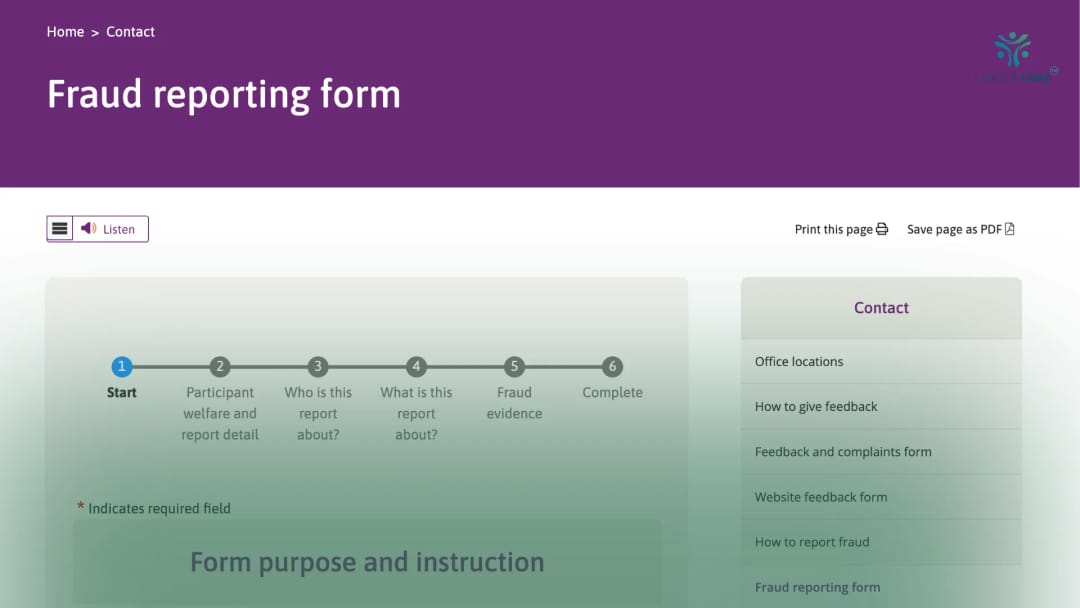
The NDIA provides clear reporting options. Providers should use these official channels when reporting concerns.
1. Use the NDIA online fraud reporting form
This option allows you to share details securely. If you cannot answer every question, you can still submit what you know.
2. Call the NDIS Fraud Reporting and Scams Helpline
The NDIA Fraud Reporting and Scams Helpline is 1800 650 717. If you have previously reported and received a reference number, quote it when following up.
3. Anonymous reports
Anonymous reports are accepted, but keep in mind that if you report anonymously, the NDIA cannot contact you for clarification. Provide as much detail as possible to support assessment.
NDIS Fraud Crackdown in the Northern Territory
The NDIA and the NDIS Quality and Safeguards Commission have announced a targeted crackdown in the Northern Territory in response to concerns about provider exploitation and fraud, including allegations of inducements like cash, alcohol, cigarettes and other incentives to pressure participants to sign up, and claims for services not delivered.
For providers across Australia, the takeaway is straightforward. Regulators are using intelligence and complaints to guide action. Providers should ensure claiming practices, documentation, and governance systems are strong and audit-ready.
Practical Provider Controls to Reduce Fraud Risk
Fraud prevention is not only about reporting. It’s also about reducing the chance of issues arising in the first place.
Strengthen documentation and claiming checks
Clear records that match service delivery reduce claim disputes and protect your organisation.
Train staff to recognise and escalate red flags
Staff should know what fraud and scams look like, and what to do when something feels wrong. A simple escalation pathway reduces delays and protects participants.
Keep reporting pathways visible
Make sure your team knows exactly where to report concerns and how. This includes keeping the reporting link and helpline details in onboarding packs and staff training resources.
Conclusion
Fraud is a crime, and the NDIA encourages people to report suspected fraud and scams. For providers, the best approach in 2026 is to stay alert, act early, and keep your documentation and internal controls strong.
If you want help strengthening your provider safeguards, documentation systems, staff training, or compliance processes, Labour Care can support you, we offer free consultation.
FAQs about NDIS Fraud and Scams:
1. What happens after a provider reports suspected fraud?
The information provided is used for fraud, integrity and enforcement purposes, and the NDIA may contact the reporter if contact details were supplied and further information is needed.
2. What records should providers keep to protect themselves if a fraud concern arises?
The NDIA states providers must keep complete and accurate records to validate claims (for example invoices, service agreements and evidence of service delivery).
3. Who handles fraud issues: the NDIA or the NDIS Commission?
Fraud tip-offs are reported through the NDIA fraud channels, while the NDIS Commission also runs compliance and enforcement functions related to provider conduct and safeguards. In practice, different matters may sit with different agencies depending on the issue.
Share this article: