
As we move closer to 2026, the first round of NDIS Worker Screening Checks issued five years ago are due to expire. This means providers and workers across Australia need to act early to stay compliant.
Renewal notices will begin rolling out from 1 November 2025, with the first expiries starting 1 February 2026. Every worker in a risk-assessed role must hold a current clearance, and providers must verify renewals through the NDIS Worker Screening Database (NWSD).
For NDIS providers, this is a crucial reminder to review workforce compliance processes, audit staff records, and ensure renewals are completed on time.
Understanding the NDIS Worker Screening Check
The NDIS Worker Screening Check is a vital safeguard that helps ensure people with disability receive safe and quality supports. It determines whether a person poses a risk to participants and is suitable to work in risk-assessed roles.
What the Check Is For
This check is part of the NDIS Quality and Safeguards Commission’s regulatory framework. It protects participants by screening workers who deliver supports and services under the NDIS.
Anyone who delivers personal care, manages participant information, or makes decisions about supports must hold a valid Worker Screening clearance.
Who Needs a Check
The Worker Screening Check applies to:
- Employees, contractors, and volunteers working for registered NDIS providers
- Self-employed or sole-trader providers delivering NDIS supports
- Key personnel listed on an NDIS registration
- Workers providing supports in risk-assessed roles, even indirectly
Registered providers must ensure that all relevant staff hold current clearances before they start working with participants.
Key Dates for NDIS Worker Screening Renewal
The renewal process begins well before a check expires, providers and workers should plan early to avoid any disruption to service delivery.
Renewal Timeline
- Renewal notices will be issued by state and territory Worker Screening Units from 1 November 2025.
- Worker Screening Checks issued in 2021 will begin to expire from 1 February 2026.
- Workers should submit their renewal at least 7 days before expiry to ensure continuous clearance coverage.
Provider Responsibilities During Renewals
Providers must:
- Monitor upcoming expiries through the NDIS Worker Screening Database (NWSD).
- Remind workers to renew early and verify their Employer ID details.
- Remove workers with expired checks from risk-assessed roles immediately, unless a permitted exception applies under state or territory legislation.
How to Renew an NDIS Worker Screening Check
The renewal process is straightforward but requires coordination between the worker and their employer.
Steps for Workers
- Visit the Worker Screening Unit website for your state or territory.
- Log in and submit a renewal application.
- Include your Employer ID to trigger a Worker Screening Verification Request.
- Continue to work only while your renewal is being processed, and your clearance remains current.
Steps for Providers
- Log in to the NDIS Worker Screening Database (NWSD).
- Approve the Worker Screening Verification Request submitted by the worker.
- Confirm worker details and link them to your organisation’s records.
- Unlink any staff who no longer work for your business to prevent incorrect expiry notifications.
Using the NDIS Worker Screening Database (NWSD) Effectively
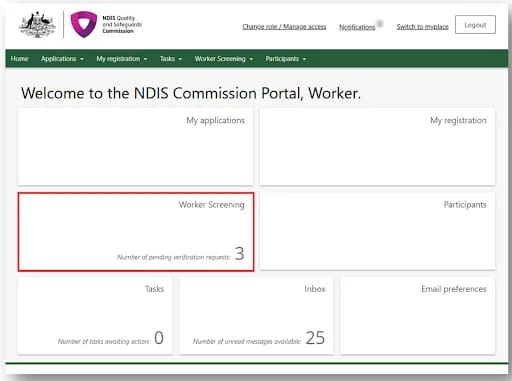
The NWSD helps registered providers manage their workforce compliance in real time. It links workers to organisations, tracks expiry dates, and sends automated alerts before a clearance expires.
Checking Expiry Notifications
- Providers will receive an automated alert 90 days before a worker’s check expires.
- Use this time to remind the worker to submit a renewal and to verify requests promptly.
- Keep your NWSD contact details current so notifications are never missed.
How to Link and Unlink Workers
The process is outlined in the NDIS Quick Reference Guide:
- Log in as a Registrant or Worker Screening Officer.
- Select Worker Screening → My Workers → Link to Worker.
- Enter the worker’s name and Worker Screening ID or Application ID.
- Select Link Worker and confirm.
- To remove someone, click Actions → Remove under “My Workers”.
Keeping your NWSD records accurate reduces compliance risk and ensures that only authorised workers remain connected to your organisation.
NDIS Worker Screening Requirements for Self-Employed Providers
Self-employed registered providers must also comply with screening obligations. If you are a sole trader, a key personnel in your business, or perform risk-assessed work, you must hold a valid clearance.
Renewals follow the same process as for employees, through the state or territory Worker Screening Unit, with your details updated in the NWSD. Maintaining this clearance is a legal requirement for continued registration.
Compliance and Consequences for Expired Clearances
Allowing a clearance to expire can have serious implications for both the worker and the provider.
Risk of Non-Compliance
- A worker with an expired or suspended check cannot legally continue in a risk-assessed role.
- Providers who fail to remove unverified workers risk breaching the NDIS Practice Standards and may face regulatory action by the NDIS Commission.
Maintaining Records and Audit Readiness
- Keep detailed records of all screening checks and renewal dates.
- Regularly review the NDIS Worker Screening Database and cross-check with internal HR systems.
- Establish an internal renewal tracking process to stay audit-ready.
Resources to Support Providers
The NDIS Commission has developed practical tools to assist providers in meeting screening obligations:
- NDIS Worker Screening Information
- Quick Reference Guide – Link and Unlink Workers (PDF)
- Local state and territory Worker Screening Unit websites provide instructions and renewal forms.
Providers who are unsure about the renewal process can contact the NDIS Commission for assistance or report technical issues through the NWSD support channels.
Preparing Your Workforce Before February 2026
The best approach is to start now. Create a simple internal plan to stay ahead of the renewal wave:
- Audit worker clearances and expiry dates.
- Send renewal reminders at least three months in advance.
- Verify new or renewed clearances as soon as you receive the request.
- Remove inactive workers from the NWSD to keep records clean and accurate.
This proactive approach ensures your organisation remains compliant and your workers continue supporting participants without interruption.
Stay Ahead, Stay Compliant
The upcoming NDIS Worker Screening Check renewals mark a key milestone in maintaining a safe and high-quality NDIS workforce. By acting early and by keeping records updated in the NDIS Worker Screening Database, providers can avoid compliance risks and ensure seamless service delivery.
At Labour Care, we help NDIS providers strengthen compliance systems, streamline worker verification processes, and prepare for audits with confidence.
Need support managing your compliance and workforce systems? Labour Care can help you create simple, effective processes for NDIS screening, policy, and training so your business stays compliant and audit-ready. Book a free consultation today..
FAQs about NDIS Worker Screening Check:
1. What happens if an NDIS worker’s screening check expires?
Once a clearance expires, the worker cannot legally continue in a risk-assessed role. Providers must immediately remove them from duties involving participant contact or sensitive information until a new clearance is issued.
2. How long does an NDIS Worker Screening Check last?
An NDIS Worker Screening Check is valid for five years from the date of issue. After that, it must be renewed to continue working in any risk-assessed role under the NDIS.
3. How long does it take to get an NDIS Worker Screening Check approved?
Processing time varies by state or territory, but most checks are completed within 2 to 6 weeks. Some may take longer if additional background information or police records need to be verified. Workers can continue in risk-assessed roles only if they have a valid current clearance, not while waiting for an initial application to be processed.
Share this article: