
Submitting payment claims correctly is critical to maintaining cash flow and compliance under the NDIS. Under the PACE system, the way providers submit claims has changed, and misunderstanding these requirements is now a common cause of rejected or delayed payments.
This guide explains how NDIS bulk payment claims work, what providers must do differently, and how aligning business practices with NDIA requirements can help avoid errors in 2026.
What Has Changed in NDIS Payment Claims Under PACE
The NDIA has removed the single claim function for all payment claims made against NDIS plans. Providers can no longer submit individual claims using the single claim option in the myplace provider portal.
If a provider attempts to submit a single line-item claim without using the bulk payment upload process, the system will return an error message. This applies to all claims, regardless of value or support type.
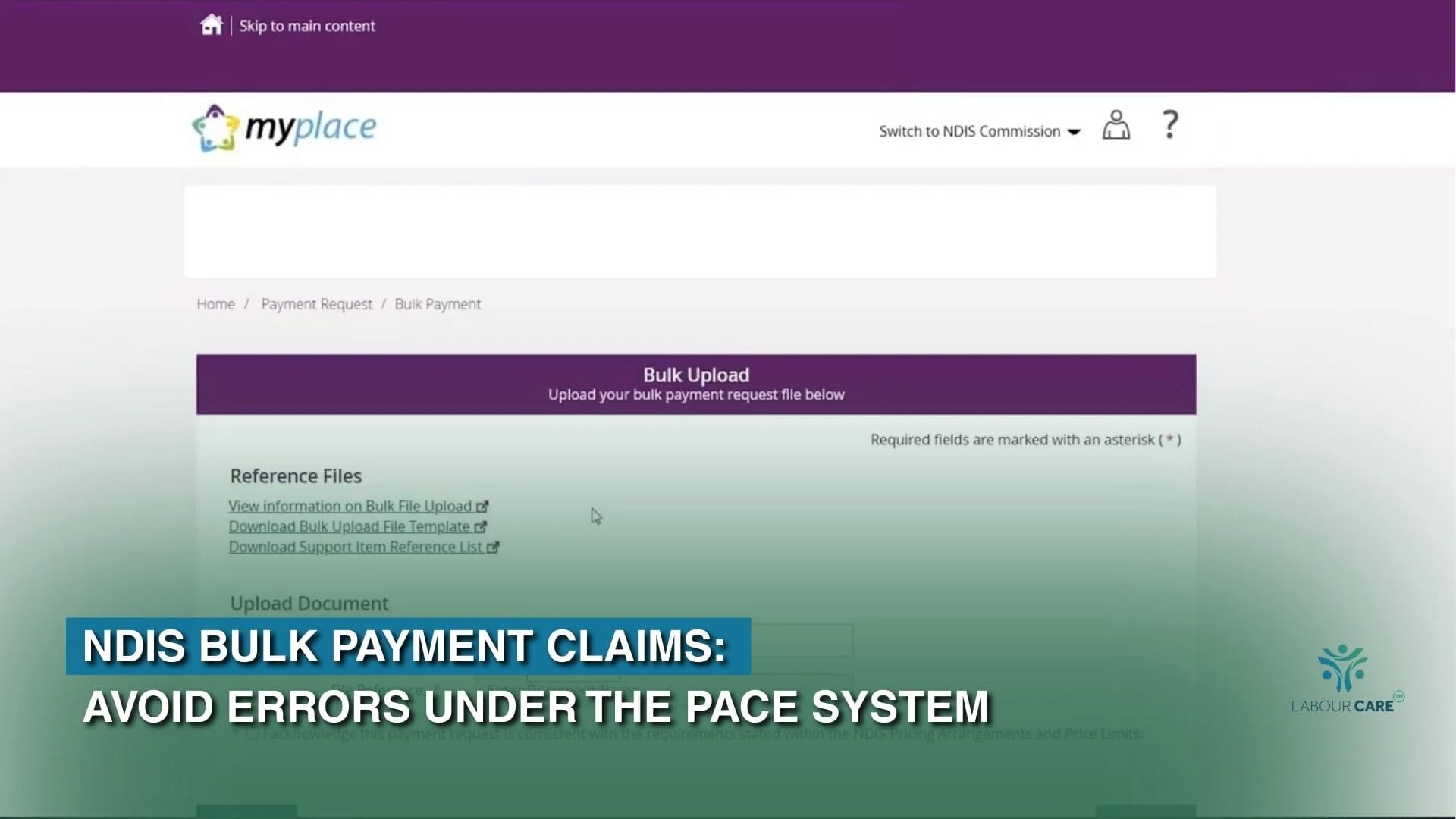
To remain compliant, providers must submit all payment claims, including single line-item claims, using the bulk upload process outlined in the NDIA’s claims and payments guidance.
What Are NDIS Bulk Payment Claims
NDIS bulk payment claims are the approved method for submitting payment requests through the myplace provider portal or approved claiming channels. Bulk uploads allow providers to submit multiple claims in one file or submit a single claim using the bulk upload template.
The bulk payment process itself has not changed. What has changed is that it is now the only accepted method for submitting payment claims. Providers should review their internal billing processes to ensure all claims are prepared in the correct format before submission.
Detailed system guidance is available in the NDIA’s PACE technical documentation for providers, which explains how claiming workflows operate under the PACE system.
Why the NDIA Requires Bulk Claims Only

Requiring all claims to be submitted through the bulk payment process supports consistent processing across the system. It reduces manual intervention and ensures claims are assessed accurately against participant plans, budgets and provider relationships.
For providers, this means claims must be accurate, complete and correctly formatted before submission. Errors that previously might have been resolved manually are now more likely to result in rejection or delay.
Aligning business practices with the NDIA’s standardised claiming workflows helps reduce administrative burden and payment issues over time.
Claims and Payments in the PACE System
Some participant plans now display updated support categories and support types. While these may look different in the system, there are no changes to support item numbers or item descriptions used for claiming.
Providers should continue using existing item codes and ensure claims align with the participant’s approved plan and available funding. The NDIA publishes up-to-date information on NDIS pricing arrangements and claiming rules, which providers should review regularly as part of their billing processes.
Key Checks Before Submitting Bulk Payment Claims
Before submitting a bulk payment claim, providers should complete several checks to reduce the risk of errors:
- Confirm the participant had an active NDIS plan on the date the support was delivered
- Check the correct support category and support type
- Confirm the participant’s fund management type allows the claim
- Ensure the provider is correctly linked to the participant where required
- Building these checks into everyday workflows can significantly reduce rejected claims.
Common Claim Errors Providers Are Experiencing
Many claim issues relate to process gaps rather than system faults. Common errors include:
- Attempting to submit single claims outside the bulk upload process
- Uploading bulk files with missing or incorrect data
- Claiming against inactive plans or incorrect support categories
- Not reviewing system error messages before resubmitting claims
The NDIA provides claims and payments FAQs to help providers troubleshoot common issues before escalating matters.
What to Do If You Experience Claim or Payment Issues
If a claim or payment issue occurs, providers are encouraged to review available guidance first. If the issue cannot be resolved, a payment enquiry ticket can be raised through the my NDIS provider portal.
Providers can also contact the National Contact Centre for assistance with more complex payment issues. Keeping clear records of claim submissions and system responses will support faster resolution.
Technical Guidance Available for Providers
The NDIA has developed detailed technical documentation and end-to-end journey maps to help providers understand how claiming works under PACE.
This guidance explains changes to business processes and interactions between participants, providers and the NDIA. Providers managing higher claim volumes or complex supports should ensure relevant staff are familiar with the PACE technical documentation.
What This Means for Provider Business Practices in 2026
The removal of single claim submissions means providers may need to adjust billing workflows and internal procedures. Finance and administration teams should be trained to prepare and submit claims using bulk upload templates correctly.
Regular reviews of claiming practices can help identify issues early and reduce the risk of payment delays. Providers who proactively align their processes are more likely to maintain consistent cash flow and compliance.
Labour Care supports NDIS providers to review claiming workflows, strengthen compliance systems and train teams for operational changes across the NDIS. Learn more about our provider support services at labourcare.com.au.
Reducing Claim Errors Under the PACE System
Bulk payment claims are now the standard method for submitting all NDIS payment requests. Providers who embed bulk upload processes into everyday operations and use NDIA guidance are better positioned to avoid errors and delays.
Staying informed, reviewing processes regularly and using available technical resources will support accurate claiming and sustainable service delivery in 2026.
FAQs about NDIS Bulk Payments:
1. Do all NDIS providers have to use bulk payment claims under PACE?
Yes. Under the PACE system, all providers must submit payment claims using the bulk upload process, even if the claim is for a single service or one line item. The single claim function is no longer accepted.
2. Can a provider still submit one claim at a time using bulk upload?
Yes. Providers can submit a single claim using the bulk upload template, as long as it is lodged through the bulk payment process. The restriction applies to the submission method, not the number of claims in the file.
3. Will bulk payment claims affect how quickly providers are paid?
Bulk payment claims do not automatically delay payments. Correctly submitted bulk claims continue to be processed within standard NDIA payment timeframes. Delays usually occur when files contain errors or incomplete information.
Share this article: