
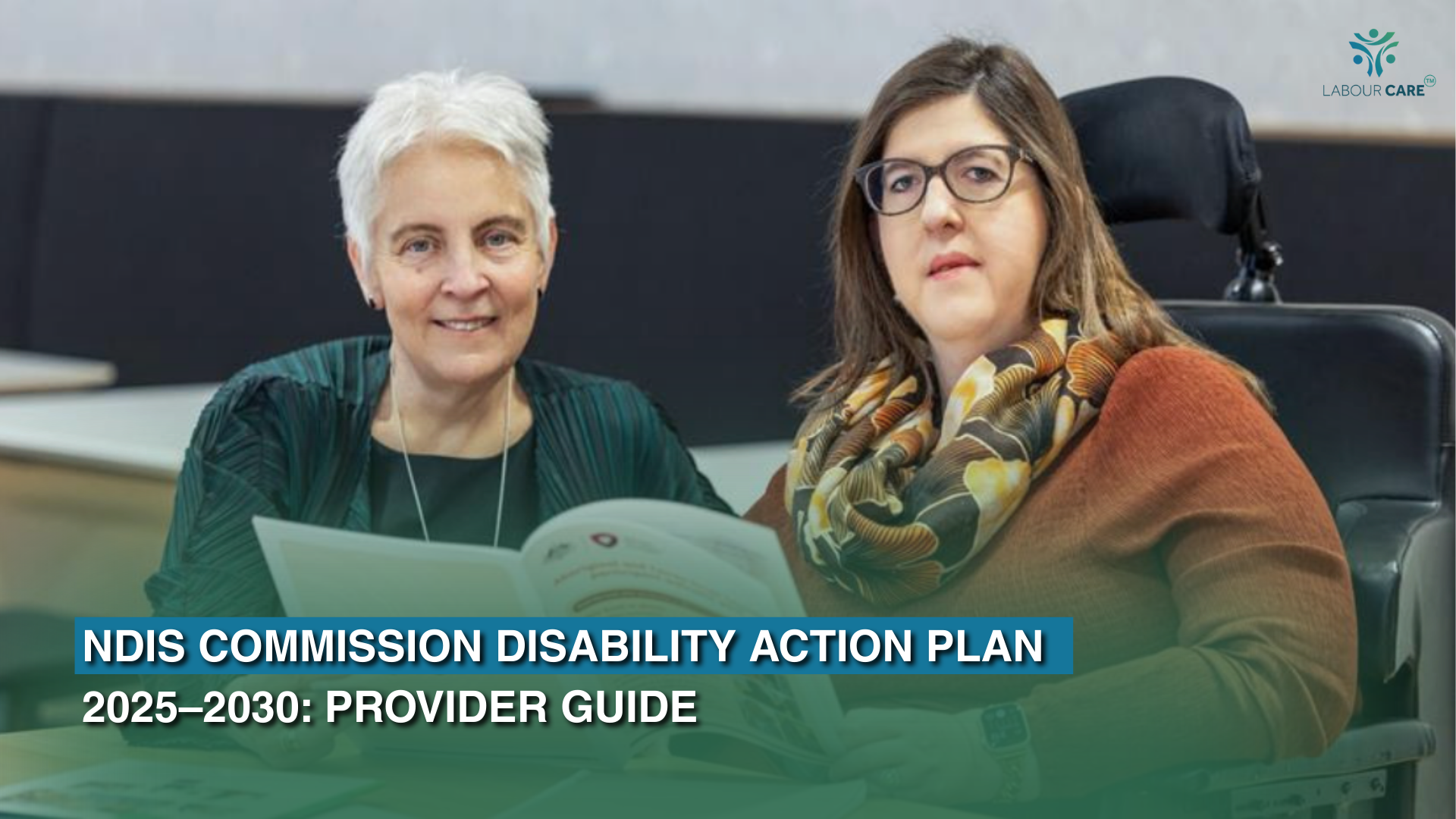
NDIS Commission Disability Action Plan 2025–2030: Provider Guide
05 October 2025 at 07:00:00 pmThe NDIS Commission Disability Action Plan 2025–2030 (DAP) is the Commission’s first formal Disability Action Plan. It outlines a five-year roadmap to embed disability inclusion across its workplace, culture, and governance. Rooted in the Disability Discrimination Act 1992 and aligned with the Australian Government’s Disability Employment Strategy, the plan commits to advancing human rights, dismantling barriers, and strengthening disability leadership.
While the plan focuses on the Commission as an organisation, it matters for NDIS providers too. It sets the tone for what will become increasingly expected across the disability sector: inclusive workplaces, accessible services, and leadership driven by lived experience.
What Is the NDIS Commission Disability Action Plan 2025–2030?
The DAP is a five-year framework to:
- create a foundation for inclusion and accessibility,
- strengthen disability leadership, and
- improve outcomes for people with disability as both staff and participants
It was shaped through consultations with people with disability, both within the Commission and from diverse external communities. Their voices, lived experiences, and knowledge were essential in ensuring the plan addresses systemic barriers and delivers practical, measurable actions.
The plan also aligns with the NDIS Review reform agenda and responds to recommendations of the Royal Commission into Violence, Abuse, Neglect and Exploitation of People with Disability. Together, these frameworks position the Commission as a leader in disability inclusion, while influencing expectations for providers and workers across the sector.
The Three Objectives of the Disability Action Plan

1. Ensuring Accessibility in Environments and Digital Systems
The first objective is to make sure everyone can access and participate in the Commission’s workplace. Commitments include:
- upgrading office locations to meet or exceed accessibility standards,
- ensuring digital content meets Web Content Accessibility Guidelines (WCAG),
- presenting information in accessible formats such as Easy Read, Auslan and plain English, and
- training staff to produce inclusive content
For providers: this is a strong cue to assess how accessible your own participant communications, digital systems, and physical environments are.
2. Becoming an Employer of Choice for People with Disability
The Commission’s second objective is to be recognised as a leading inclusive employer. Actions include:
- developing a Disability Employment Strategy,
- improving recruitment practices,
- embedding disability leadership training for managers,
- creating leadership pathways for staff with disability, and
- strengthening employee networks
For providers: this highlights the importance of inclusive recruitment, supporting neurodivergent staff, and ensuring equal access to training and career progression.
3. Leading Disability Inclusion
The third objective is for the NDIS Commission to be a visible leader in inclusion within the APS and the disability sector. This includes:
- benchmarking progress using the Australian Disability Network’s Access and Inclusion Index,
- establishing an Advisory Council to inform policy and uphold human rights,
- embedding Human Rights Guidance developed with the Australian Human Rights Commission, and
- co-designing regulatory priorities with people with lived experience.
For providers: aligning your governance and service delivery with human rights principles will prepare you for heightened expectations and strengthen participant trust.
The Role of the DART Program in Driving Change
The Data and Regulatory Transformation (DART) program underpins the plan by modernising IT systems, strengthening cyber security, and enabling real-time regulatory data. It will:
- enhance participant safeguarding,
- improve provider oversight,
- reduce regulatory burden, and
- ensure personal and sensitive data is better protected
What This Means for NDIS Providers
While the DAP is an internal roadmap, its influence is sector-wide. Providers can expect:
- Stronger expectations on accessibility, both in physical environments and participant communication.
- A push for workforce diversity, especially in disability representation and leadership.
- A culture shift towards rights-based practice, ensuring dignity, inclusion, and safety.
These are not just compliance issues, they’re opportunities to build more resilient, trusted organisations.
How Providers Can Prepare and Align
- Review HR and workforce policies to support inclusive recruitment and retention.
- Improve accessibility in all participant-facing communication and digital systems.
- Embed lived experience into governance and service design.
- Stay connected with Commission updates to adapt as expectations evolve.
Taking action now ensures providers are not only compliant but also positioned as leaders in disability inclusion.
Building an Inclusive Future Together
The NDIS Commission Disability Action Plan 2025–2030 is more than an internal strategy. It’s a blueprint for cultural and systemic change that will shape expectations across the entire NDIS sector. Its objectives, accessibility, employment, and leadership, provide a roadmap for providers who want to build trust, strengthen compliance, and grow with confidence.
By aligning with these values today, providers can demonstrate their commitment to inclusion while preparing for the future of the NDIS.
Want to strengthen your organisation’s inclusion and compliance strategies? Labour Care can guide you with policies, training, and practical tools to keep your business aligned with the latest NDIS Commission priorities. Book a free consultation today.
FAQs about NDIS Commission Disability Action Plan 2025–2030 (DAP):
1. What timelines should providers be aware of for the Disability Action Plan rollout?
The DAP runs from 2025 to 2030, with Years 1–2 focusing on governance and foundations, and Years 3–5 building towards best practice and sector leadership. The Commission will publish annual implementation plans and progress reports, signalling evolving expectations for providers.
2. What role does the DART program play in the Disability Action Plan?
The Data and Regulatory Transformation (DART) program underpins the DAP by delivering a modern IT system with real-time data. For providers, this means enhanced safeguarding, reduced regulatory burden, stronger oversight, and improved cyber security.
3. How will the Commission implement and report on the DAP (what should providers expect to see)?
There will be annual implementation plans, regular performance monitoring, public reporting, and a mid-point evaluation to guide the second half of the rollout.
Latest Post