
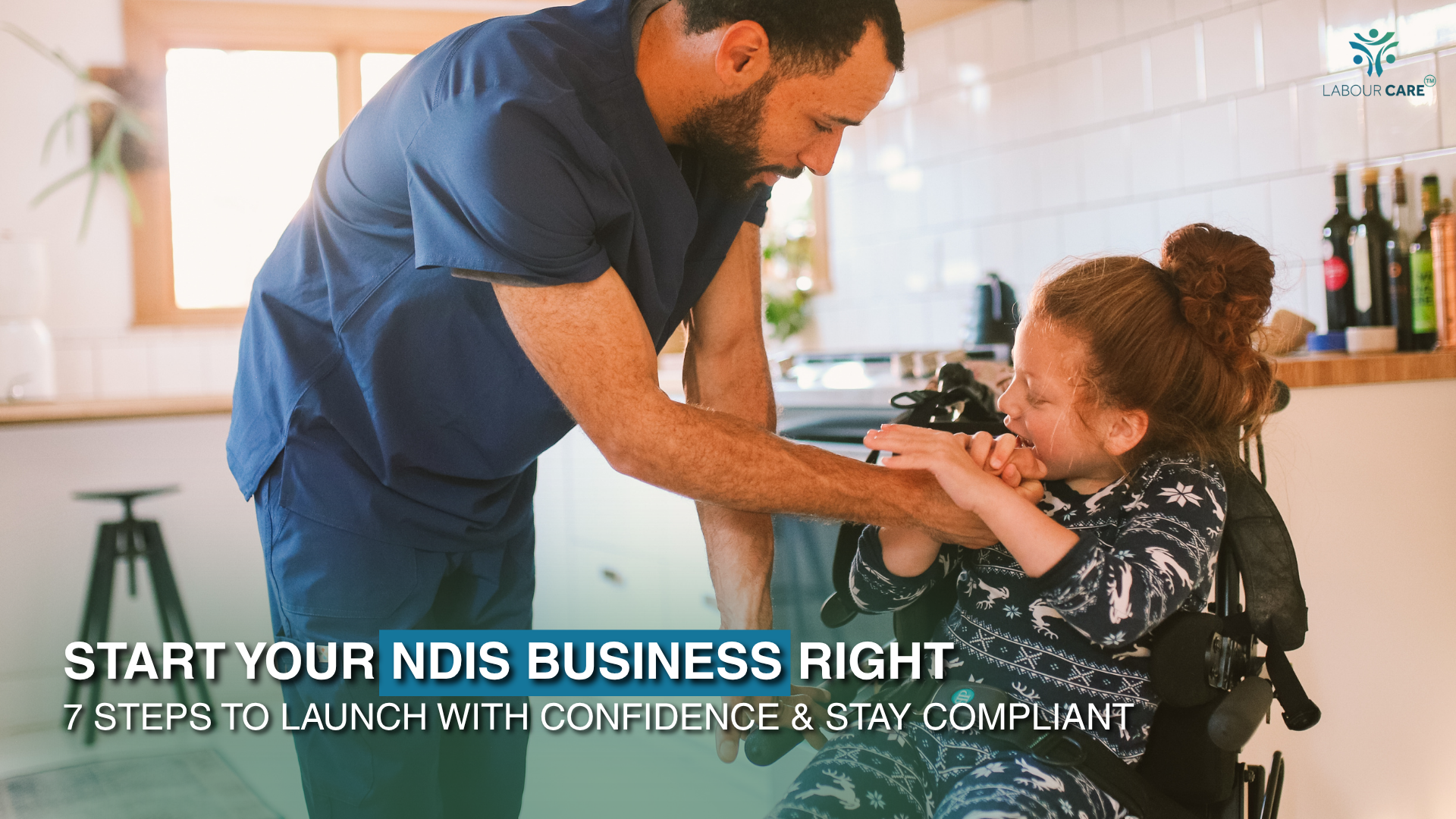
NDIS Business: 7 Steps You Need to Start Strong and Stay Compliant
29 June 2025 at 09:05:00 pmAre you ready to launch an NDIS business that makes a real impact—without getting lost in red tape? With over half a million Australians now receiving support through the NDIS, there’s never been a better time to start. But navigating compliance, audits, and registration can quickly feel overwhelming.
If you're passionate about disability care and want to run a compliant, impactful NDIS business, this guide is for you. We’ll walk you through 7 essential steps—from setup to registration—so you can start strong, avoid costly missteps, and build a provider business you’re proud of.
Step 1 – Understand the NDIS Business Landscape
Before diving into your NDIS business registration, it’s essential to understand where your services fit into the broader scheme.
The National Disability Insurance Scheme (NDIS) is one of the largest social reforms in Australia’s history, supporting over 646,000 participants as of the March 2024 quarterly report. With the sector projected to grow to over $40 billion by 2025, there is a real opportunity for purpose-driven businesses to make a lasting impact while building a sustainable service model.
NDIS participants receive funding in three main ways:
- Self-managed (they choose and pay providers directly),
- Plan-managed (a financial intermediary pays you), or
- NDIA-managed (you must be a registered provider to deliver services).
Understanding this is crucial: if you want to support NDIA-managed clients or deliver high-risk supports like personal care or behaviour support, registration with the NDIS Commission is mandatory. If you’re offering lower-risk supports like life skills training or cleaning, and you plan to work only with self- or plan-managed participants, you can operate as an unregistered provider—but you still need to meet quality standards.
Registered vs. Unregistered Providers – What’s the Difference?
- Registered providers go through a formal audit process and are approved by the NDIS Quality and Safeguards Commission. They can work with all participant types and deliver high-risk supports.
- Unregistered providers don’t undergo audit but are limited in who they can support. They must still follow laws and meet duty-of-care obligations.
Visit the NDIS Commission for official guidance on provider obligations.
Step 2 – Choose Your NDIS Services Wisely
The services you offer should align with both your passion and your professional qualifications. Selecting the right supports at the outset makes your NDIS business not only easier to manage—but also audit-ready.
Some of the most common NDIS service areas include:
- Personal care and daily living assistance
- Support coordination
- Psychosocial recovery coaching
- Allied health (occupational therapy, speech therapy, physiotherapy)
- Community access and social participation
- Domestic assistance (cleaning, yard maintenance)
When deciding, think about what you're qualified to deliver now and what you could grow into.
Pro tip: Your choice of service types affects your audit category,lower-risk services usually require a simpler verification audit, while higher-risk supports need a full certification audit.
Choose services that align with your capabilities but also support long-term growth. Start where you're strong, and scale with purpose.
Step 3 – How to Set Up an NDIS Business Legally and Professionally
If you’re wondering how to set up an NDIS business the right way, one that’s structured, protected, and ready to scal, this step is essential. Too many providers skip the foundations, only to face roadblocks later during registration or audits. Setting up your business legally and professionally from day one builds credibility and long-term success.
Start with the legal basics:
- Register your ABN through the Australian Business Register. Make sure your business name reflects your services clearly and professionally.
- Choose a structure that suits your goals:
- Sole trader – simpler, but higher personal risk.
- Company – more protection, but involves extra admin.
- Partnership – ideal if you’re teaming up with another provider.
Insurance is non-negotiable:
To protect yourself, your team, and your clients, you’ll need:
- Public liability insurance
- Professional indemnity insurance
- Optional: Workers compensation, depending on your state and structure.
These are often checked during audits and may also be required before you can secure contracts with plan managers or referrers.
Set up your internal systems:
A professional NDIS business needs more than good intentions—it needs good systems. At a minimum, put in place:
- A CRM or case management system for tracking participants
- Rostering and scheduling tools
- Templates for intake, progress notes, and service agreements
- A secure file storage system for participant records

Step 4 – Prepare for NDIS Business Registration With Confidence
When you're ready to expand your reach and support NDIA-managed participants or offer high-risk supports, you’ll need to complete your NDIS business registration. This can feel daunting, but clear preparation will make the process smoother.
First, decide: Do you need to register?
- Yes, if you want to work with NDIA-managed participants
- Yes, if you offer high-risk supports (e.g. personal care, behaviour support)
- Optional, if you work only with self- or plan-managed clients and offer low-risk services
Key documents to prepare:
- Your policies and procedures, tailored to your services
- Worker Screening Checks for all staff
- Incident management and risk frameworks
- Signed participant service agreements
- Emergency and disaster planning policies
You’ll also undergo an audit, either:
- Verification (for low-risk services), or
- Cerification (for high-risk or complex supports
Auditors will assess your documentation, processes, and sometimes conduct interviews or file reviews.
Step 5 – How to Register for NDIS Without the Stress
NDIS business registration can feel like navigating a maze, especially with so many forms, requirements, and systems to understand. But when you break it into manageable steps, the process becomes far more achievable. Whether you're registering for the first time or expanding your services, a clear roadmap can save time, money, and overwhelm.
Here’s a simplified step-by-step process to register your NDIS business:
- Create an account on the NDIS Commission portal
Start your application at: www.ndiscommission.gov.au. - Select your registration groups
Choose the services you plan to deliver (e.g. personal care, support coordination). This determines your audit level and required documents. - Upload your supporting documentation
Include policies, insurances, proof of qualifications, and risk management plans. These must align with the NDIS Practice Standards. - Undertake the audit
Your audit will be either verification or certification, depending on your services. Auditors will assess your documentation and may conduct interviews or file checks. - Respond to audit feedback and await final approval
If any issues are identified, you’ll have the chance to address them before final approval is granted.
Labour Care Pro Tip: Save weeks of admin time by using our consultant prepared documents aligned with the NDIS Practice Standards and tailored to your business. These are designed to help you meet audit requirements faster and with confidence.
Step 6 – Train Your Team and Meet NDIS Compliance Requirements
Your team is the backbone of your NDIS business—and their training is critical to staying compliant and delivering safe, high-quality care. The NDIS Practice Standards require providers to ensure all workers are competent, qualified, and aware of their responsibilities. That starts with training.
At a minimum, your staff should complete:
- CPR and First Aid training (mandatory for most direct support roles)
- NDIS Worker Screening Check
- A structured induction covering your policies, incident reporting, and participant rights
- Ongoing training logs to document professional development and refreshers
“We always tell new providers—compliance isn’t just paperwork. It’s about building a confident, capable workforce who understand what quality care looks like day to day.”
– Laura Saul, NDIS Consultant, Labour Care
To make this easier, Labour Care offers hands-on CPR and First Aid courses designed specifically for NDIS settings. Our instructors are qualified, flexible, and ensure your team is both compliant and confident in handling emergencies.
Need compliant training options? Labour Care offers nationally recognised CPR and First Aid courses, tailored for NDIS providers—with flexible options that suit busy teams.

Step 7 – Stay Compliant and Grow with Confidence
Starting your NDIS business is only the beginning, long-term success comes from staying compliant and continuously improving. With the NDIS Commission increasing its oversight, ongoing compliance isn't just about ticking boxes. It’s about building trust, delivering high-quality services, and growing your business with integrity.
Here’s how to stay ahead:
- Review your policies regularly
Regulations evolve, and so should your policies. Schedule a review at least annually—or sooner if NDIA updates impact your services.
- Stay up to date with changes
Subscribe to updates from the NDIS Commission and join provider networks to stay informed. Labour Care also offers ongoing compliance alerts to help you respond proactively.
- Document everything
Keep clear records of:
- Incident reports
- Feedback and complaints
- Participant progress notes
- Staff training logs
Consistent documentation can protect your business and improve service quality.
- Build a culture of compliance
Create open lines of communication within your team. Encourage feedback, regular training, and continuous improvement. Compliance becomes easier when it’s embedded in your culture.
Final Thoughts – You Don’t Have to Do It Alone
Starting an NDIS business is exciting, but it can also feel overwhelming—especially with compliance, registration, and systems to set up. The good news? You don’t have to figure it all out alone. At Labour Care, we’re here to support you every step of the way with personalised consulting, ready-made Operational Packs, and certified training. Whether you need help with your audit, policies, or getting your team ready, we've got the tools and expertise to make it easier.
Book your free consultation today and take the first confident step toward building a strong, compliant NDIS business.
You’ve got the passion—we’ll help you build the path.
FAQs – Starting an NDIS Business
1. Is NDIS Business worth it?
Yes—if you're genuinely passionate about supporting people with disabilities, starting an NDIS business can be one of the most rewarding and impactful paths. The sector is growing rapidly, with over 600,000 participants and rising demand for personalised, quality support.
2. Is being an NDIS provider profitable?
Absolutely—being an NDIS provider can be profitable, especially when your services are well-matched to your qualifications, community needs, and pricing structure. Registered and unregistered providers alike can generate strong revenue by offering high-demand services such as support coordination, personal care, or allied health. The key is staying compliant, managing overheads smartly, and building trusted relationships with participants.
3. How do I get clients for NDIS?
Getting NDIS clients starts with clarity, credibility, and connection. Here are some strategies:
- Register on key platforms like MyCareSpace, Clickability, and the NDIS Provider Finder (if registered).
- Build relationships with local support coordinators and community groups.
- Create a simple, informative website that explains your services and values clearly.
- Maintain high service quality—word-of-mouth and participant referrals are powerful in the NDIS world.
Showcase your compliance and professionalism through up-to-date training, policies, and transparent communication.
Latest Post